Phone or Wearable? Recording the Exam Room for an AI Scribe
An AI scribe turns what it hears into a SOAP note. So the single biggest thing you control is not the template or the settings. It is where the microphone sits.
Here are the four common places, what each does well, and where each falls short.
1. The phone on the counter
Good: free, simple, and supported by every veterinary scribe. Face up on the exam counter, within an arm’s length of the conversation, a modern phone records clearly.
Falls short: the phone stays where you left it. When you carry the patient to the treatment area or step into the kennels to check a recheck, the recording either stops capturing you or captures the empty room. It is also one more thing on a crowded counter next to the alcohol and the clippers.
Tip: put it down before the client starts the history, not after. The history is the part a scribe most often misses.
2. The phone in your pocket
Good: it moves with you.
Falls short: fabric muffles speech, and every movement rubs against the microphone. A pocket recording is the most common cause of a thin, gappy transcript. It also means unlocking a phone with gloves on to start and stop.
3. A smartwatch
Good: on your body, always with you, and quick to start.
Falls short: your wrist spends the consult below the table, on the patient or under running water. Recording a whole day of consults is a lot to ask of a watch battery.
4. A recorder you wear
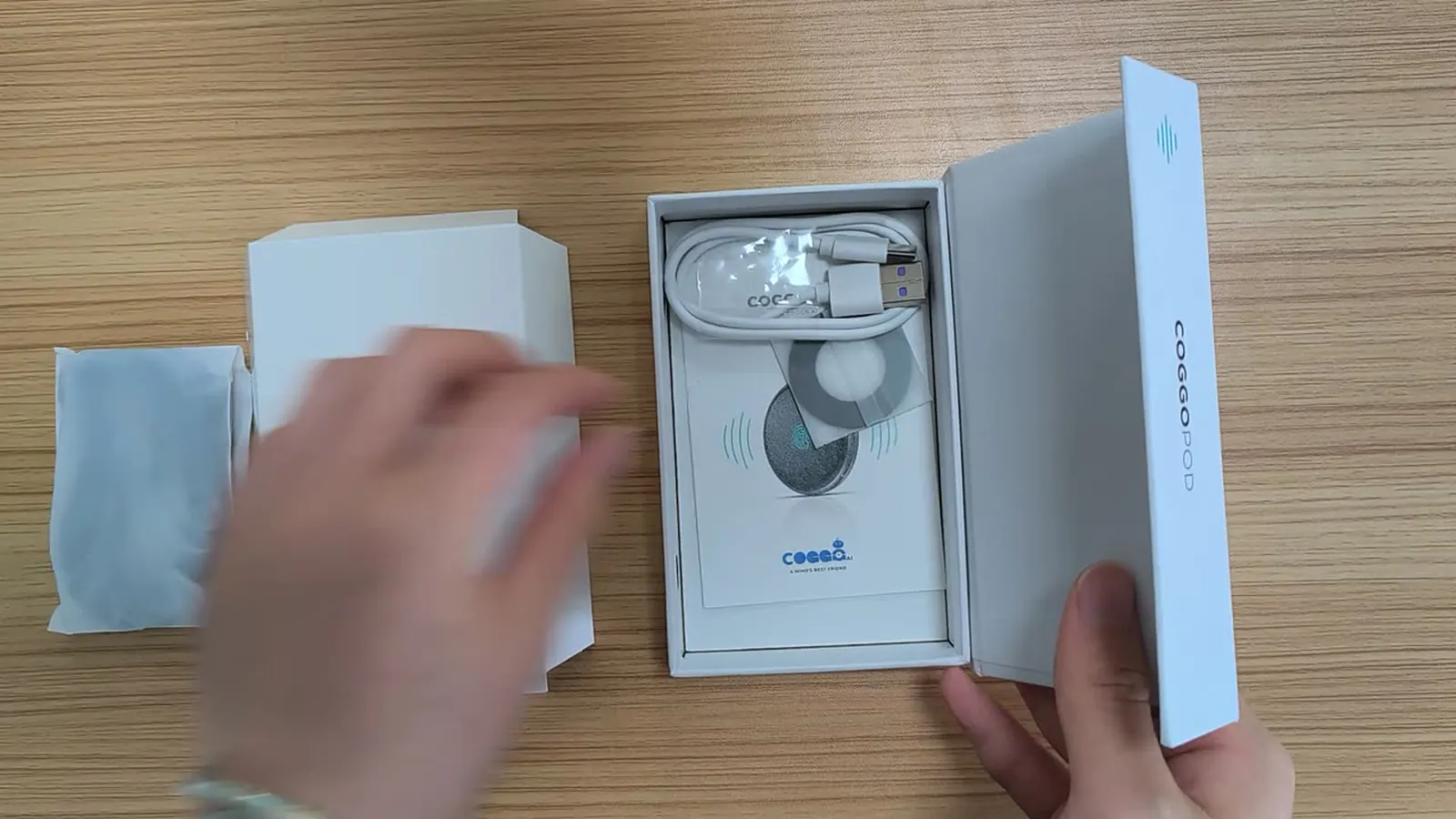
Good: on your chest, close to your voice, and it goes where you go. A recorder built for your scribe records on its own and syncs later, so the phone can stay anywhere. CoggoPod, for example, records 18 to 20 hours per charge, stores about 1,000 hours on board, and starts with a touch on the fingerprint.
Falls short: it is one more device to charge, and it has to be clipped on before the consult starts. Like any recorder, it is not for wet tables or dunk tanks: keep it dry.
Quick comparison
| Phone on counter | Phone in pocket | Smartwatch | Wearable (CoggoPod) | |
|---|---|---|---|---|
| Moves with you | No | Yes | Yes | Yes |
| Audio quality | Good | Poor | Fair | Good |
| Hands-free start | No | No | Partly | Yes, one touch |
| Battery for a full day | Drains the phone | Drains the phone | Small battery | 18 to 20 hours |
| Works with no phone nearby | n/a | n/a | Depends on watch | Yes, saved on the pod |
| Extra cost | None | None | If you own one | Yes |
Five habits that help whichever you choose
- Start recording before the history. Clients give the most useful details in the first two minutes.
- Say the vitals out loud. “Temp 101.3, heart rate 120, respiratory rate 24, weight 62 pounds.” A scribe like Coggo pulls spoken vitals straight into the Objective section.
- Name what you see. “Mild tartar on the caudal molars, otherwise WNL” gives the scribe something to write; silence gives it nothing.
- Say the plan to the client. Explaining the plan out loud is good communication, and it writes the P of your SOAP note for you.
- Tell everyone you are recording. It is good practice, and in many places it is the law.
The bottom line
If you see every patient at one exam table, a phone on the counter is enough. If your day moves, between rooms, out to the barn or onto a farm call, a recorder you wear keeps up with you. Coggo supports all three ways to record: the app, a phone call, and CoggoPod.
Want to try a wearable? See how the wearable options compare, or clip on a CoggoPod at AAEP 2026 or VMX 2027.